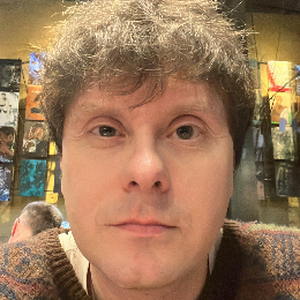
Daniel Clayton
Postgraduate researcher in formal and functional linguistics
News!
I've had my very first publication in ULAB's U-Lingua Magazine! Aimed at a non-specialist readership, When Languages Meet: What Happens When We Start Talking to Each Other? introduces the differences between language and dialect, and the problems associated with these terms, before discussing what happens when two or more languages and/or dialects live side-by-side and interact with each other, a phenomenon known as language / dialect contact. You can read it here.
Current projects
What I'm doing in June, 2026:
- presenting a brief snippet of my work on object-initial languages at the York LLS PG Summer conference on 10th June;
- intensively learning Georgian before doing fieldwork on Abkhaz in Georgia in July.
Research interests
Broad: Syntactic, morphological and semantic typology, formal and functional syntax, language description and documentation, language diversity, typological universals and parameters
Narrow: typologies of tense–aspect–mood–evidentiality (TAME), object-initial word orders (OVS and OSV), negation typology, differential object marking (DOM), agreement and parameter hierarchies
Education
2025-2026 MA (by research) Linguistics, University of York
2023-2025 MSc Linguistics, University of York
2019-2022 PGDip Applied Linguistics, University of Birmingham
2005-2009 BA (Hons) Arabic, University of Manchester
Academic Background
At present, I am a Master's by Research student at the University of York, supervised by Dr. Imke Driemel. I work on constituent order with a focus on object-initial orders from both a formal and typological-functional approach.
Recently, I graduated with an MSc with distinction in Linguistics with a focus on formal syntax and typology, supervised by Professor George Tsoulas. Prior to this, I completed a PGDip in Applied Linguistics at the University of Birmingham and a BA in Arabic at the University of Manchester. My BA dissertation focused on variation in tense and aspect in a sample of the varieties of Arabic, supervised by Professor Yaron Matras.
Research Orientation
In my current work, I adopt a deliberately hybrid approach that draws on both formal and functional-typological perspectives, treating them as complementary rather than competing frameworks.
More generally, my research orientation is empiricist and typologically informed, with a strong focus on indigenous and under-documented languages, particularly as they bear on questions of linguistic diversity, typological universals and parameters, and syntactic theory.
Areal interests
I am particularly drawn to Amerindian languages, especially languages of the Amazon and of North America and languages of the Caucasus, although I am generally motivated by opportunities for cross-linguistic study, particularly where the data and phenomena are rare or underrepresented in both theoretical and typological scholarship.
Languages
I’m an avid language learner. I’ve studied dozens of different languages from different regions of the world and language families. At the moment I’m mostly focusing on developing my Spanish and Portuguese. Additionally, I have recently been trying to learn (albeit it slowly) some Anishinaabemowin (Ojibwe), Paraguayan Guaraní and Georgian.
Influences
I am influenced by a number of syntacticians, typologists and field linguists, including Robert Dixon, Lyle Campbell, John Payne (University of Manchester), Marianne Mithun, Joseph Greenberg, Daniel Everett, Mark Baker, and Matthew Dryer.
Career Goals
I hope to pursue a PhD in language description and documentation with a focus on the functional morphosyntax of an indigenous language.
Contact me
daniel.clayton@york.ac.uk